Statement SR-692271 · posted September 28, 2026
Creator CommerceFull statement
Snapdeal and YouTube Link Up to Push Creator-Led Commerce
Snapdeal has partnered with YouTube on creator-led commerce. No commission rates, cookie windows or attribution terms were disclosed, leaving affiliates without the numbers needed to model the program.
Statement notes
- Snapdeal signed a partnership with YouTube to expand creator-led commerce, per ET BrandEquity.
- No commission rates, cookie windows, attribution periods or fee structures were disclosed in the announcement.
- The deal sits in Indian value e-commerce, a vertical where affiliate programs typically run CPA or hybrid terms.
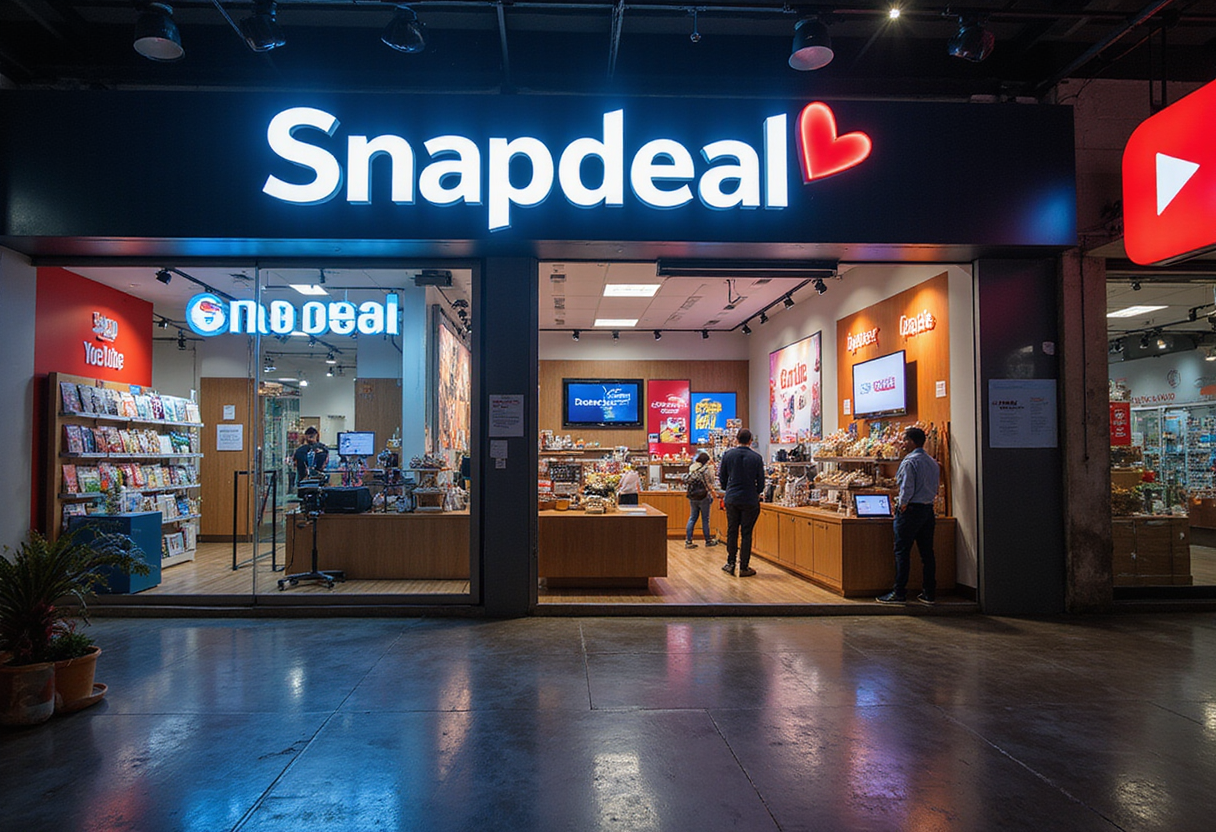
Snapdeal has signed a partnership with YouTube to expand creator-led commerce, according to ET BrandEquity. The headline fact for performance marketers is structural, not financial: an Indian e-commerce marketplace is formally routing creator content into its acquisition funnel, a model that sits closer to CPA and rev-share affiliate mechanics than to traditional display or paid search spend.
The announcement, as reported, gives no commission rates, cookie windows, attribution periods or fee structure. That absence matters. Creator-commerce integrations live or die on attribution terms. Without a published tracking window or payout schedule, partners cannot model EPC against existing affiliate lines, and the deal currently reads as a vendor assertion rather than a measured result.
What the model implies
Snapdeal operates in Indian value e-commerce, a vertical where affiliate programs have historically run on CPA and hybrid structures rather than pure CPL. A YouTube integration suggests product-linked creator content — reviews, hauls, unboxings — feeding directly into Snapdeal listings. For affiliates and creator-network managers, that means:
- Attribution questions come first. Last-click across YouTube-to-app journeys is notoriously leaky in India, where a large share of transactions closes inside mobile apps that standard browser cookies cannot track. Whether Snapdeal and YouTube publish an attribution window, and whether it credits in-app conversions, will determine if the program is worth joining at all.
- Rev-share versus flat CPA. Marketplaces of Snapdeal's type typically pay category-level CPA rates; creator commerce programs elsewhere have leaned toward hybrid deals with a rev-share tail. No terms were disclosed in the report.
- Scale context. YouTube's Indian user base is among the platform's largest globally, and Snapdeal competes against Amazon, Flipkart and Meesho for low-ticket transactions — a segment where creator trust signals convert well. The program's logic is vertical-appropriate even if its economics are unpublished.
Compliance and disclosure
Any creator-led commerce program operating at scale in a market covered by global platform rules inherits disclosure obligations. Creators monetizing Snapdeal links will fall under YouTube's paid-promotion labeling requirements, and any campaign reaching US or EU audiences pulls in FTC disclosure rules and equivalent EU fair-commerce provisions. Programs that scale creator commerce without enforced disclosure risk clawbacks and platform-level enforcement — a program-terms conflict that affiliate managers should price into forecasts.
Measured results versus announcement
Nothing in the disclosed material establishes conversion lift, sample size or incremental revenue. The partnership is at announcement stage. Treat vendor claims about creator commerce traction accordingly: no baseline, no delta. For comparison points, affiliates should watch for the first published program terms — commission schedule, cookie or attribution window, payout thresholds and whether in-app conversions track — before reallocating traffic.
What to watch
If Snapdeal opens the program beyond managed creators to an affiliate network layer, that changes the addressable market materially. Until then, this is a managed partnership with unknown economics. Watch for term-sheet disclosure, attribution methodology and early EPC data from participating creators as the signals that separate a real performance channel from a brand-press exercise.
The next milestone will be Snapdeal publishing program mechanics — commissions, windows and tracking scope — which will determine whether creator-led commerce becomes a scalable performance line for the marketplace or remains a top-of-funnel branding play.
source Google News: Creator commerce & monetization (Source)
Filed under
More from Sophie Lindqvist
Show full bio
Senior reporter covering industry trends and analytics at RevShare Report.
38 articles
Carried forward
- Snapdeal Taps YouTube Creators to Drive Creator-Led Commerce
- YouTube and Shopee Team Up on Creator Commerce in Southeast Asia
- YouTube's India Affiliate Payouts Rise 160% in Creator Commerce Push
- Wishlink Closes $17.5M to Expand Creator Commerce Platform
- Wishlink Banks $17.5M Series B to Scale Creator Commerce